
A dental implant cannot develop a cavity the way a natural tooth can. However, the gums and bone surrounding an implant are still living tissues, and those tissues can become inflamed or affected by disease.
People sometimes refer to this generally as gum disease around a dental implant. More specifically, inflammation may involve peri-implant mucositis or, when supporting bone is also affected, peri-implantitis.
That does not mean implant complications are inevitable.
Many implants can be maintained with appropriate home care and professional monitoring. The important thing is to pay attention to changes around an implant and have persistent or unusual symptoms evaluated rather than waiting for significant discomfort.
What Is Peri-Implant Mucositis?
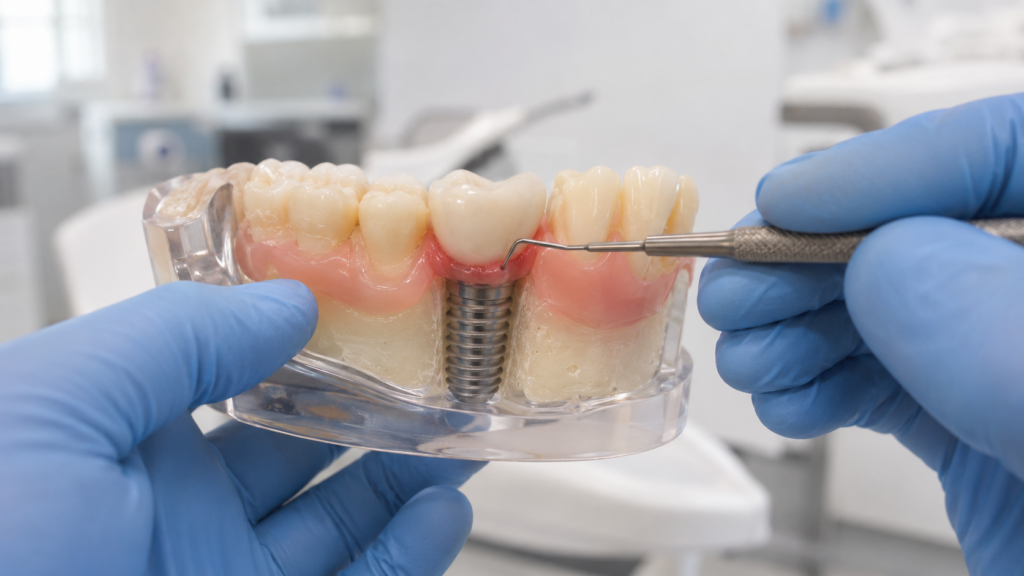
Peri-implant mucositis is inflammation involving the soft tissue around a dental implant without the supporting bone loss associated with peri-implantitis.
Signs may include:
- Redness
- Swelling
- Bleeding around the implant
- Changes in the appearance of the surrounding gum tissue
These changes deserve attention, but inflammation around an implant does not automatically mean the implant has peri-implantitis.
An evaluation can help determine what is happening and whether changes in home care, professional maintenance, treatment, or continued monitoring may be appropriate.
Not every case of peri-implant mucositis progresses to peri-implantitis.
What Is Peri-Implantitis?
Peri-implantitis involves inflammation around an implant along with loss of supporting bone.
Because that bone contributes to the foundation supporting the implant, changes in bone levels are an important part of periodontal evaluation.
Peri-implantitis can vary considerably from one patient to another. The amount and pattern of bone loss, condition of the gum tissue, implant position, periodontal history, and other clinical findings can all influence treatment planning.
This is why the diagnosis and treatment approach should be based on an examination rather than symptoms alone.
What Signs Should You Watch for Around an Implant?
Changes around an implant do not automatically mean peri-implant disease is present, but they can provide a reason to have the area examined.
Possible warning signs include:
- Red or swollen gum tissue
- Bleeding when brushing or cleaning around the implant
- Persistent tenderness
- Gum recession
- Drainage
- A persistent bad taste
- Increasing discomfort
- Changes in the appearance of the gum tissue
- A new or unusual feeling around the implant
You do not need to determine the cause yourself.
If something around an implant looks or feels different, an evaluation can provide more useful information than waiting to see whether the problem becomes painful.
Can Peri-Implant Disease Develop Without Pain?
Yes.
Inflammation or changes in the supporting bone may occur without significant discomfort.
Pain is therefore not the only way to judge the health of an implant.
Professional monitoring gives your dental or periodontal team an opportunity to evaluate the tissues around the implant and compare changes over time, including changes you may not notice on your own.
Why Can Inflammation Develop Around an Implant?
There is no single explanation for every case.
Plaque accumulation can contribute to inflammation around implants, but a periodontist may also consider other factors when evaluating the area.
These may include:
- Previous periodontal disease
- Home-care challenges
- Tobacco use
- Implant position
- The condition of the surrounding tissues
- Individual health factors
- Previous implant complications
A history of gum disease does not guarantee that an implant will develop peri-implant disease.
It does, however, provide useful information when planning ongoing maintenance and evaluating changes around the implant.
How Is the Area Around an Implant Evaluated?
A periodontal evaluation looks at more than whether the implant itself appears intact.
Your periodontist may consider:
- The condition of the surrounding gum tissue
- Bleeding or inflammation
- Gum recession
- Changes in bone support
- Implant position
- Plaque accumulation
- Previous findings
- Your periodontal history
- Changes you have noticed
Appropriate diagnostic tools may also be used when they can provide additional information about the tissues supporting the implant.
The purpose is to understand whether the area is healthy, whether inflammation or bone loss is present, and what type of care may be appropriate.
Can Peri-Implantitis Be Treated?
Treatment may be possible, but there is no single approach that fits every implant.
The appropriate plan depends on factors such as the amount of inflammation, bone support, gum tissue, implant position, severity of the problem, and the patient’s overall periodontal condition.
Depending on the findings, care may involve professional cleaning, periodontal treatment, laser-based therapy, surgery, maintenance, or another individualized approach.
For selected patients, peri-implantitis treatment may include LAPIP™, a laser application used in peri-implant care.
LAPIP™ should not be viewed as a guarantee that disease will stop, lost bone will regenerate, or every compromised implant will be preserved. The treatment approach still depends on the individual implant and surrounding tissues. Shady Grove’s supplied accuracy guidance specifically requires cautious language around these outcomes.
What If Bone Has Already Been Lost Around the Implant?
Bone loss is an important concern with peri-implantitis, but its presence alone does not determine the outcome.
The periodontist may need to consider:
- How much bone support remains
- Where the bone loss is occurring
- Implant position
- Condition of the gum tissue
- Severity of inflammation
- Other periodontal or oral-health concerns
Some compromised implants may be managed with treatment and ongoing monitoring.
Other implants may eventually be considered too compromised to remain.
Neither outcome should be assumed before the implant and surrounding tissues are carefully evaluated.
What About Gum Recession Around an Implant?
Gum recession can also occur around dental implants.
It may change the appearance of the tissues or expose more of the implant restoration.
The cause and significance of the recession need to be evaluated before deciding what to do next.
In selected situations, soft-tissue grafting may be considered as part of treatment planning. Soft-tissue grafting is a confirmed service, including connective-tissue and allograft procedures.
Grafting does not guarantee that every implant-related recession concern can be corrected or that recession will never return.
Why Does Implant Maintenance Still Matter?
Implant care does not end after placement.
The tissues around the implant continue to require home care and professional monitoring.
Maintenance visits give the dental or periodontal team an opportunity to look for changes such as:
- Inflammation
- Bleeding
- Recession
- Plaque accumulation
- Changes in bone support
- Other changes around the implant
Shady Grove also confirms the BLAST Implant Maintenance Protocol as part of its implant-care approach.
BLAST is a maintenance protocol, not a guarantee that an implant will remain healthy indefinitely or never develop infection or another complication.
Your maintenance schedule should be based on your periodontal history, implant condition, home care, and individual risk factors rather than one universal interval.
What Can You Do at Home?
Daily care remains important because plaque can accumulate around implant restorations and the surrounding tissues.
Your dental or periodontal team can recommend techniques that fit your specific implant and restoration.
General priorities may include:
- Brushing consistently
- Cleaning around the implant as directed
- Cleaning between the teeth
- Following individualized home-care instructions
- Keeping recommended professional maintenance appointments
- Reporting bleeding, swelling, recession, drainage, or other changes
No home-care routine can guarantee that an implant will never develop a complication.
The goal is to support the surrounding tissues while allowing professional monitoring to identify changes when they occur.
When Should You Have an Implant Evaluated?
Consider contacting your dental or periodontal team if you notice a persistent change around an implant, including:
- Bleeding
- Redness or swelling
- Gum recession
- Drainage
- Tenderness
- Increasing discomfort
- A change in the gum tissue
- Any new concern that does not seem normal for you
An evaluation does not mean you will automatically need extensive treatment.
It provides an opportunity to determine whether the area is healthy, needs monitoring, or requires additional care.
Protecting the Gum and Bone Around Your Implant
Dental implants replace missing teeth, but they still depend on healthy surrounding tissues.
Peri-implant mucositis can involve inflammation in the gum tissue, while peri-implantitis includes inflammation accompanied by loss of supporting bone. Neither condition should be diagnosed based on one symptom alone.
Ongoing home care, professional maintenance, and attention to changes around an implant can all play a role in protecting that periodontal foundation.
At Shady Grove Periodontics & Implants, we evaluate the gums and bone surrounding dental implants and develop treatment or maintenance recommendations based on the condition of the individual implant.
If you have noticed bleeding, swelling, recession, drainage, or another change around an implant, contact us to schedule a periodontal evaluation.