
Regular dental cleanings and deep cleanings may sound similar, but they are recommended for different reasons. A regular cleaning focuses primarily on maintaining healthy teeth and gums. A deep cleaning is a form of periodontal treatment used when plaque, tartar, and bacteria have collected below the gumline and signs of gum disease are present.
Understanding deep cleaning vs regular cleaning can help you feel more confident when your dentist or periodontist recommends treatment. Needing a deep cleaning does not simply mean that your teeth need a more thorough version of a routine cleaning. It means the supporting tissues around your teeth require a different level of care.
At Shady Grove Periodontics & Implants in Rockville, MD, each recommendation is based on a detailed evaluation of your gums, periodontal pocket measurements, dental images, bone support, symptoms, and health history. The goal is to identify the level of care your gums need without recommending more or less treatment than is appropriate.
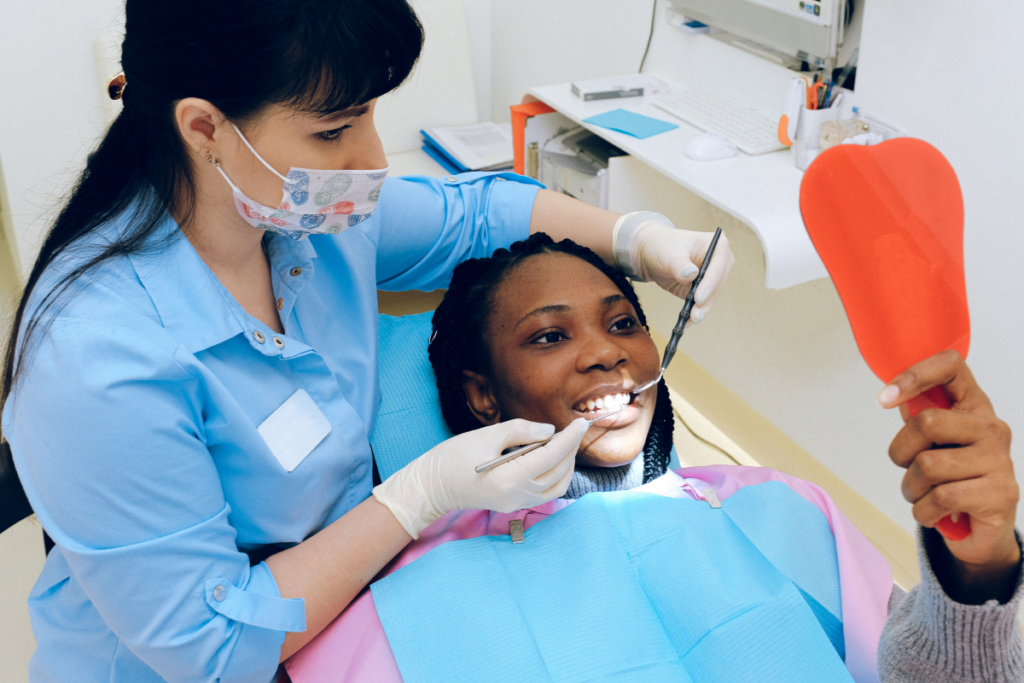
What Is a Regular Dental Cleaning?
A regular dental cleaning, sometimes called a preventive cleaning or prophylaxis, is intended for patients whose gums are generally healthy or who have mild inflammation without significant damage to the structures supporting the teeth.
During a routine cleaning, a dental hygienist removes plaque and hardened tartar from the visible surfaces of the teeth and around the gumline. The teeth are then polished to remove certain surface stains and leave the enamel feeling smoother.
Regular cleanings are an important part of preventive dental care because brushing and flossing cannot remove tartar after it has hardened. Professional cleanings help control buildup in areas that may be difficult to reach at home.
A regular cleaning may be appropriate when:
- Gum tissue is generally firm and healthy
- Periodontal pockets are within a healthy or stable range
- There is no significant bone loss around the teeth
- Tartar buildup is mainly above or near the gumline
- The patient does not have active periodontitis
- Any mild gum inflammation can be managed with preventive care and improved home hygiene
Routine cleanings are generally performed on a recurring schedule, but the ideal frequency depends on the individual. Some patients need more frequent professional care because of their oral health history, plaque buildup, medical considerations, or risk of gum disease.
What Is a Deep Cleaning?
A deep cleaning is a nonsurgical periodontal procedure also known as scaling and root planing. It is used when bacteria and hardened deposits have collected below the gumline, where routine brushing, flossing, and standard cleaning instruments cannot adequately reach.
Our deep cleaning treatment includes two closely related steps: scaling and root planing.
Scaling
Scaling removes plaque, tartar, and bacterial deposits from the tooth surfaces above and below the gumline. Special instruments may be used to reach into periodontal pockets around the teeth.
The purpose is to remove deposits that are contributing to inflammation and infection in the surrounding gum tissue.
Root Planing
Root planing focuses on cleaning and smoothing the root surfaces beneath the gums. Rough areas and remaining deposits can make it easier for bacteria to remain around a tooth.
Cleaning these root surfaces creates a healthier environment for the gum tissue to heal and fit more closely around the teeth. The gums do not always return to their original condition, especially when bone or tissue has already been lost, but treatment can help manage the infection and improve access for continued care.
Deep cleaning may be completed in sections of the mouth rather than treating every area at once. The recommended approach depends on how many teeth are affected, the depth of the periodontal pockets, the amount of buildup, and the patient’s comfort and treatment needs.
The Main Difference Between Deep Cleaning and Regular Cleaning
The most important difference is not how long the appointment takes or how much tartar is present. It is whether gum disease has affected the deeper supporting tissues around the teeth.
A regular cleaning is preventive. It removes deposits from teeth when the gums and supporting bone are generally healthy.
A deep cleaning is therapeutic. It treats bacterial buildup and inflammation below the gumline when periodontal pockets or other signs of periodontitis are present.
Here is a practical comparison:
Area Being Cleaned
A regular cleaning focuses mainly on the visible tooth surfaces and areas around the gumline.
A deep cleaning extends beneath the gums to clean the roots of teeth inside periodontal pockets.
Reason for Treatment
A regular cleaning helps maintain oral health and prevent problems from developing.
A deep cleaning is recommended to manage active gum disease and reduce deposits that cannot be reached through routine cleaning.
Use of Local Anesthetic
A routine cleaning usually does not require local anesthetic.
Local anesthetic may be used during scaling and root planing to help keep the treatment area comfortable. The decision depends on the depth of treatment, sensitivity, and individual needs.
Follow-Up Care
After a routine cleaning, the patient generally continues with regular preventive appointments.
After a deep cleaning, the gums must be reevaluated. Some patients transition to periodontal maintenance, which is different from a routine preventive cleaning and is often scheduled more frequently.
How a Periodontal Evaluation Determines Which Cleaning You Need
A recommendation should be based on a periodontal evaluation, not simply on whether your gums bleed or how long it has been since your last cleaning.
During your first periodontal visit, the evaluation may include a review of your medical and dental history, an examination of your teeth and gums, and measurements around each tooth.
Several findings help determine the appropriate type of cleaning.
Periodontal Pocket Measurements
Healthy gum tissue fits closely around each tooth. Gum disease can cause the space between the tooth and gum to deepen, creating a periodontal pocket.
A small measuring instrument is used to assess these spaces around the teeth. Deeper measurements may indicate inflammation, loss of attachment, or bone changes, but the numbers must be considered along with bleeding, gum recession, dental images, and other findings.
There is no responsible way to decide that someone needs a deep cleaning based on one measurement viewed in isolation.
Bleeding and Inflammation
Bleeding during brushing, flossing, or periodontal measurements can be a sign of gum inflammation.
However, bleeding alone does not determine the treatment. A patient may have gingivitis that can be managed with routine professional cleaning and improved home care or periodontitis that requires scaling and root planing.
Swelling, redness, tenderness, and changes in the texture of the gum tissue also provide useful information.
Bone Levels
Dental X-rays allow the clinician to evaluate the bone supporting the teeth. Bone loss is an important difference between gingivitis and periodontitis.
Gingivitis affects the gum tissue but does not involve permanent loss of the supporting bone. Periodontitis affects deeper tissues and may result in bone loss around the teeth.
Tartar Below the Gumline
Tartar beneath the gums cannot be removed with a toothbrush or floss. It may also be difficult to fully address during a routine cleaning.
When deposits extend onto the tooth roots inside periodontal pockets, scaling and root planing may be needed to clean those areas effectively.
Gum Recession and Tooth Mobility
Gum recession, exposed roots, changes in the bite, or loose teeth may indicate damage to the tissues supporting the teeth.
Recession does not always mean that someone has active gum disease. Brushing habits, tooth position, thin gum tissue, and other factors can contribute. When recession is significant, soft tissue grafting may be discussed separately from deep cleaning.
Signs You May Need a Periodontal Evaluation
Gum disease can develop gradually, and discomfort is not always present during its early stages. This is why professional evaluation matters even when your teeth feel normal.
Schedule an evaluation if you notice:
- Gums that bleed regularly
- Red, swollen, or tender gum tissue
- Persistent bad breath or an unpleasant taste
- Gum recession
- Teeth that appear longer than before
- Sensitivity around exposed roots
- Pus or drainage near the gumline
- Spaces developing between teeth
- Loose permanent teeth
- Changes in how your teeth fit together
- A recommendation for deep cleaning from your general dentist
These symptoms do not automatically mean you need scaling and root planing. They indicate that the health of your gums and supporting bone should be assessed.
What to Expect During a Deep Cleaning
Before treatment begins, the periodontist or hygienist will review the areas being treated and answer questions about the process.
Local anesthetic may be used to numb the gums and tooth roots. Instruments are then used to remove plaque and tartar from the tooth surfaces and periodontal pockets. The root surfaces are carefully cleaned to reduce bacterial deposits and rough areas.
Depending on the extent of disease, treatment may be divided into separate appointments. Patients who feel anxious about periodontal treatment can also ask whether one of our sedation options may be appropriate. Sedation recommendations depend on medical history, anxiety level, the planned procedure, and other individual factors.
It is common for the gums or teeth to feel temporarily sensitive after scaling and root planing. Your periodontal team will provide instructions based on your treatment and should be contacted if you have concerns about healing or symptoms.
What Happens After Scaling and Root Planing?
Deep cleaning is not considered complete simply because the deposits have been removed. Follow-up evaluation is necessary to see how the gum tissue responds.
At a reevaluation, the periodontal team may check:
- Changes in pocket depth
- Bleeding and inflammation
- Plaque control
- Gum tissue response
- Areas that remain difficult to clean
- Tooth mobility
- The patient’s home-care routine
Some pockets may become shallower as inflammation decreases. Other areas may remain deep because of bone loss, root shape, or advanced disease.
Patients who have been treated for periodontitis commonly need periodontal maintenance rather than returning to standard preventive cleanings. Periodontal maintenance includes cleaning above and below the gumline while closely monitoring areas with a history of disease.
The recommended schedule varies. It is based on how quickly buildup returns, the severity of previous disease, home care, smoking or tobacco use, health conditions, and response to treatment.
What If a Deep Cleaning Is Not Enough?
Scaling and root planing is often the first stage of periodontal treatment because it addresses plaque, tartar, and bacterial deposits below the gumline without surgery. However, advanced or complex cases may require additional care if deep periodontal pockets, inflammation, or areas that are difficult to clean remain after treatment.
When these concerns persist, periodontal surgery may be considered. Surgical treatment can provide better access to deeper root surfaces, reduce periodontal pockets, or support regenerative treatment in selected areas.
For some patients, advanced laser periodontal treatment may also be considered. The recommendation depends on the type and severity of the disease, the anatomy of the affected area, overall health, and treatment goals.
Needing additional treatment does not necessarily mean that scaling and root planing failed. Deep cleaning may reduce inflammation and bacterial levels while providing important information about how the gum tissue responds. That response helps guide the next stage of personalized periodontal care.
Can You Choose a Regular Cleaning Instead of a Deep Cleaning?
Patients always have the right to understand and discuss their treatment options. However, a routine cleaning is not an equivalent substitute when periodontitis and deposits below the gumline are present.
Cleaning only the visible portions of the teeth may leave tartar and bacteria on the roots inside periodontal pockets. The gums may continue to bleed or remain inflamed because the source of the problem has not been fully addressed.
Before making a decision, ask your provider to explain:
- Which areas show signs of periodontal disease
- Whether bone loss is visible
- Where tartar is located
- What the pocket measurements indicate
- Whether the entire mouth or only certain areas need treatment
- What could happen if treatment is delayed
- How the gums will be reevaluated afterward
Clear explanations and a personalized plan can make the recommendation easier to understand.
How to Support Gum Health After a Deep Cleaning
Professional treatment works best when it is supported by consistent home care.
Your periodontal team may recommend:
- Brushing twice daily with appropriate technique
- Cleaning between the teeth every day
- Using specific brushes or other cleaning tools
- Following instructions for any recommended oral rinse
- Avoiding tobacco products
- Managing dry mouth when present
- Attending periodontal maintenance appointments
- Reporting new bleeding, swelling, or tooth movement
Avoid aggressive brushing. Using too much pressure can irritate the gums and contribute to recession without cleaning more effectively.
The right home-care tools depend on the spacing between teeth, restorations, implants, dexterity, and gum condition. Personalized instruction can help you clean thoroughly without damaging the tissue.
Deep Cleaning vs. Regular Cleaning in Rockville, MD
A regular dental cleaning helps maintain healthy teeth and gums. A deep cleaning treats bacterial buildup beneath the gumline when periodontal disease is present.
The difference can only be determined through an examination that considers periodontal pockets, bleeding, tartar location, gum recession, dental images, and bone support. Symptoms alone are not enough to establish the correct treatment.
Shady Grove Periodontics & Implants provides personalized periodontal care in Rockville, MD, with a focus on clear communication, patient comfort, and treatment planning based on each patient’s needs.
Choosing the Right Cleaning for Your Gum Health
Regular cleanings and deep cleanings serve different purposes. Routine cleanings help prevent disease and maintain healthy gums, while scaling and root planing treats areas below the gumline affected by periodontitis.
If you have bleeding gums, gum recession, persistent bad breath, deeper periodontal pockets, or a recommendation for scaling and root planing, a periodontal evaluation can clarify what type of care is appropriate.
Contact Shady Grove Periodontics & Implants to schedule an evaluation and receive a treatment recommendation based on the health of your gums and supporting bone.
Frequently Asked Questions
Is a deep cleaning the same as a regular cleaning?
No. A regular cleaning removes plaque and tartar primarily from the visible tooth surfaces and around the gumline. A deep cleaning uses scaling and root planing to clean the tooth roots below the gumline when periodontal disease is present.
Does bleeding during a cleaning mean I need a deep cleaning?
Not necessarily. Bleeding can occur with gingivitis or periodontitis. Your provider must also evaluate periodontal pocket measurements, bone levels, tartar buildup, gum recession, and other findings before recommending treatment.
Can a regular cleaning treat gum disease?
A regular cleaning may help manage mild gingivitis when there is no bone loss or deeper periodontal involvement. Periodontitis generally requires scaling and root planing or another form of periodontal treatment.
Will I need deep cleanings forever?
Not every future appointment will involve full scaling and root planing. After treatment, many patients transition to periodontal maintenance, which is designed to monitor and manage areas with a history of gum disease.
How often should I have periodontal maintenance?
The schedule is personalized according to your disease history, response to treatment, plaque buildup, home care, and risk factors. Your periodontal team will recommend an interval based on your individual needs.